
This Sunday, the lectionary invites us to consider Romans 14:1-12. The English Standard Version supplies the heading “Do Not Pass Judgement on One Another.”
Romans is a letter Paul wrote to several small assemblies of Christians, in Rome. To churches which had mixed memberships. Mixed because the members included three people groups. First, people who could trace their descent to Jacob, practiced Jewish customs such as circumcision and eating only kosher food, and centred their lives on the Jerusalem Temple – and recognized Jesus as Messiah, the Promised One, who inaugurated the Kingdom of God. Second, Gentiles who had converted to “Judaism,” identified as Jews, then recognized Jesus as Messiah. Third, Gentiles who had not previously identified as Jews, and recognized Jesus as Messiah.
What do we mean when we say, “recognized Jesus as Messiah?”
We mean “anointed one,” king. We look back to the Prophet Samuel who anointed David to be king of God’s people, Israel.[1] We look back to the prophecies about the Messiah in the Bible, beginning in Genesis – the first book of the Bible – in which God says that an offspring of the woman, Eve, will crush the head of the serpent; and will end the rule of evil, the rule of Satan who operates by deception, by hiding the truth[2] – this is in Genesis 3:15, which Bible scholars call, “The first Gospel.”[3] We look back to the angel’s promise to king David’s descendants, Mary and Joseph, that they would be the parents of Jesus, “the Son of God.”[4]
What brings Christians together is loyalty to Jesus, the Messiah. Paul summarizes it in Romans 8:9, where he writes,
“if you confess with your mouth that Jesus is Lord and believe in your heart that God raised him from the dead, you will be saved.”
Notice the word “Lord.” It signals that for the Christian, no parent, or priest, or Caesar,[5] or king, or president, or prime minister, is Lord. For the Christian, the only Lord is Jesus whom Caesar’s government crucified. For the Christian, loyalty to Jesus comes before loyalty to a national flag or anthem. This is why many churches have established the policy that in their buildings, they will not display national flags, will not sing national anthems. This is especially true in Germany and Japan where loyalty to the state and to Hitler and to Hirohito drove dreadful behaviours.
Now I return to the question I posed in my title: Why does Paul talk about weak persons and vegetarians?
I begin with vegetarians. The Hebrew Bible[6] did not require Jews to be vegetarians. What it required was that any meat they ate had to comply with kosher laws. This meant they couldn’t eat forbidden animals like camels, pigs, frogs, snakes – and cats and dogs.[7] They couldn’t eat meat which had been in contact with such non-kosher meats. They also couldn’t eat meat from which the blood had not been drained.
Jews were a tiny minority in Rome, where the most common meat was pork. So, it was very difficult for them to eat meat and comply with the dietary laws. Therefore, many Jews avoided eating meat. They became vegetarians. But this meant that they couldn’t join in the meals of their Gentile, non-Jewish neighbours. And then, suddenly, because of Jesus the Messiah’s teachings and death and resurrection, dietary laws and ceremonial laws such as circumcision of males, and sacrificial laws such as making offerings at the Temple, were set aside.
Jews were also a tiny minority in the churches of Rome. Most members were Gentiles. They knew Jesus accepted even Samaritans, another group of descendants of Jacob who, for centuries, had rejected much of the Hebrew Bible and had focused their worship not on the Temple in Jerusalem,[8] but on another Temple,[9] near the city of Nablus. These Gentile Christians understood Jesus’ teachings as releasing them from the requirements of Jewish traditions – as confirmed by the Jerusalem Council recorded in the book of Acts.[10] Paul appealed to these Gentile Christians to think of their Jewish older brothers and sisters as “weaker.” Today, his use of this word, “weaker,” is considered insensitive and politically incorrect. It was not so in those days.
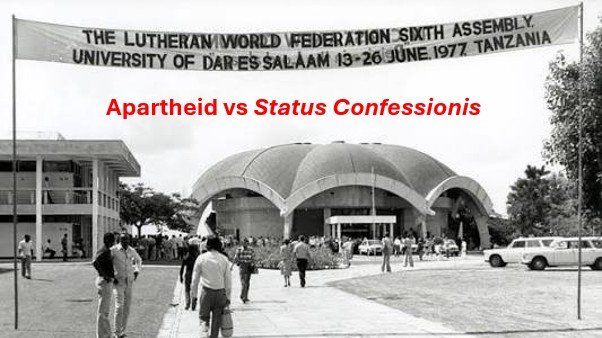
As I meditate on today’s passage, I think of how adherence to dietary laws divides society, makes it more difficult to build communities. I think of how sensitive people are to words like “weaker.” I think of how necessary truth is, in God’s plan to establish his Kingdom of God on earth. And I think of two principles framed by Lutheran theologians: status confessionis[11] and adiaphora.[12] Simply put, there are some practices which if adopted, will cause a church to cease being Christian. And there are other practices which are neither approved nor forbidden. I leave it to you to list some examples.
Peace be with you.
[1] See 1 Samuel 16.
[2] This is also why truth is central to all Christian thinking, and Jesus called the Holy Spirit the Spirit of Truth – see John 14 – 16.
[3] in Latin, protoevangelium.
[5] In the Roman Empire, there was no separation between state and religion. Many Christians refused to burn incense to Caesar, refused to call him Lord, refused to take oaths of loyalty to Caesar and the empire. For their resistance, they were martyred.
[6] What we today call the Old Testament.
[7] See Leviticus 11 and Deuteronomy 14.
[8] On Mount Moriah.
[9] On Mount Gerizim. It was modelled on the Jerusalem Temple. It too had no idols.
[10] See Acts 15.
[11] In a meeting in Dar es Salaam in 1977. The 6th Lutheran World Federation Assembly declared that for a church to maintain it’s status confessionis, it’s claim to be a church, it must reject apartheid. See DeJonge Michael P (2017); Bonhoeffer, status confessionis, and the Lutheran tradition; Stellenbosch Theological Journal.
[12] Things about which we may be indifferent. For example the use of candles and icons.

To learn more about Rama, click here.
This reminds me that there are truths in our faith we should never compromise. Yet when Christians talk about Jesus, we are united, but when we focus on things other than Jesus—especially politics—we can easily become divided. Perhaps adiaphora reminds us to keep Christ at the center.
Pingback: 1 Corinthians 1: The answer is a Suffering God, a Criminal Messiah – Bangsar Lutheran Church