
This Sunday, the lectionary invites us to ponder Matthew 9:9-13, and 18:26. The English Standard Version supplies the heading “Jesus Calls Matthew” to the first passage, and “A Girl Restored to Life and a Woman Healed,” to the second passage.[1]
In the first passage, Matthew, the author, tells us that he was a tax collector. Tells us he was sitting in his booth, working. Tells us Jesus came up to him and said, “Follow me,” and he obeyed.
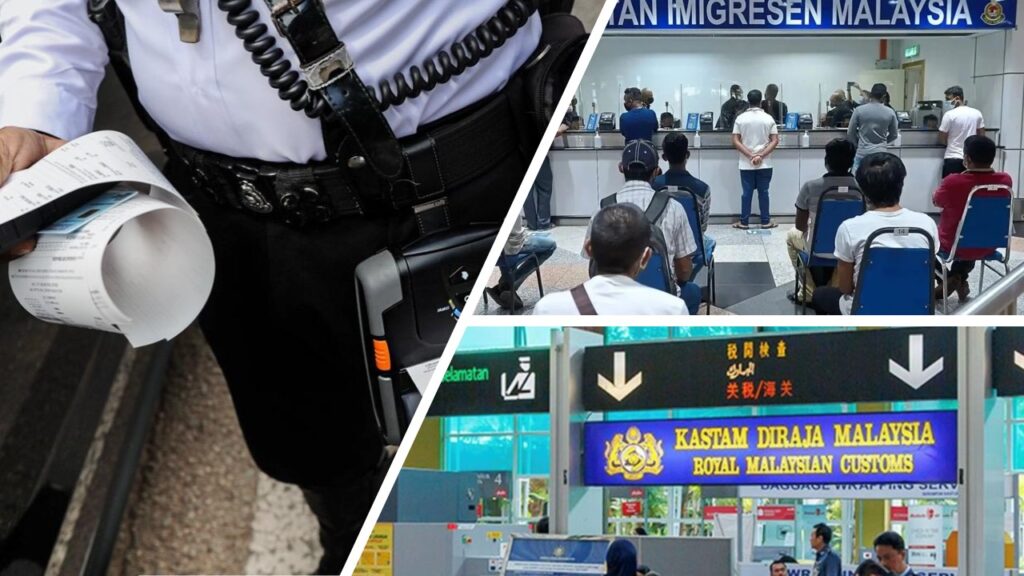
Matthew brought Jesus and his companions, together with many of his fellow tax collectors, and other friends, to his home to rest, chat, eat, and drink. They were observed by “the Pharisees,” people whose blood boiled whenever they saw their fellow Jews associating with people like tax collectors: people commonly regarded as corrupt and dishonest – like customs, police, and immigration officers in Malaysia.
The Pharisees made snide remarks to some of Jesus’ disciples. Matthew captures what they said in one question: “Why does your teacher eat with tax collectors and sinners?” Jesus heard them. Jesus responded. He said,
“Those who are well have no need of a physician, but those who are sick. Go and learn what this means, ‘I desire mercy, and not sacrifice.’ For I came not to call the righteous, but sinners.”
Notice that Jesus said he prefers to be in the company of sinners! And he said he came to “call” them, which means using words.
How many of us choose to hang-out in places filled with “sinners”? How many of us tell people they are sinners; that they have been included in a “call” issued by God himself? How many customs, immigration, and police officers, do we know?
In the second passage, Matthew recounts the healing of a bleeding woman who “polluted” Jesus by touching him – though only his garment – and got healed. Jesus told her that her faith had healed her. Matthew also recounts what people said after Jesus accepted an urgent request by a Jewish religious leader to come to his home and heal his daughter: people said Jesus raised her from the dead.
Many came to Jesus because they or people they loved were sick. They believed Jesus could heal, and they came to him expecting him to exercise his power to heal.
Remarkably, the Bible records an incident at Bethesda hospital[2] in Jerusalem, which was filled with sick and disabled persons.[3] Yet, when Jesus entered, he miraculously healed only one person.
In our church, just like in all churches, there are many sick persons. Some have long-term ailments which plague them all their lives. Some have short-term ailments due to correctable birth defects, accidents or infections. Some have end-of-life issues like worn-out joints, wrinkled skin, tired hearts, dementia. Some have cancer. Some are depressed.
We often pray for them in general, or by laying on of hands. Sometimes, often together with treatment by medical professionals, they are healed.
Some among us pray for recovery even for people who have lived into their seventies, and spend every day locked in dementia or severe pain. Others among us pray for palliative care and “comfortable” death – I am boldly using the word “death,” which is a taboo word in our society.
In my explorations of the subject of prayer, I’ve been much helped by Philip Yancey’s 2006 book, “Prayer, Does it Make Any Difference?” He tells us about the book in these words:
Prayer can be frustrating, confusing, and fraught with mystery.
[In the book,] I probe such questions as: Is God listening? Why should God care about me? If God knows everything, what’s the point of prayer? How can I make prayer more satisfying? Why do so many prayers go unanswered? Do prayers for healing really matter? Does prayer change God?
I began with a list of such questions, then I studied all 650 prayers in the Bible and interviewed scores of people about their own experiences with prayer.
The process of writing caused a revolution in my own conception and practice of prayer. I now see it not so much as a way of getting God to do my will as a way of being available to get in the stream of what God wants to accomplish on earth.
One reviewer summarized the message of the book in these words:
Prayer … is our partnership with God, our chance to join forces with God’s power to confront suffering and evil head-on. … [is] a window into knowing the mind of God, whose kingdom is entrusted to all of us frail, selfish people on earth. [The book details how,] in nations such as Romania and South Africa, … prayer has transformed hearts and permitted bloodless change.
If you struggle with prayer, do read the book.
Peace be with you.
[1] Chapter 9 lies within “Book 2” of Matthew’s gospel, comprised of chapters 8-10. These chapters recount Jesus’ acts of healing people, of freeing them from control by evil spirits; his responses to critics; his calling of individuals, and sending out his chosen disciples, his associates. Book 1: chapters 3-7; book 3: chapters 11- 13:52; book 4: chapters 13:53-18:35; book 5: chapters 19-25.
[2] It was a healing centre; it didn’t have “modern” drugs, equipment, and interventions.

To learn more about Rama, click here.
Pingback: Matthew 9-10 makes me question the Luther Rose – Bangsar Lutheran Church