
This Sunday, the lectionary invites us to ponder Matthew 28:16-20. The English Standard Version supplies the heading “The Great Commission.”
The passage contains the last four verses in the Gospel according to Matthew. The first verse tells us that the eleven disciples – twelve minus one because Judas is no more – obeyed the command Jesus had given them through the women who had visited his tomb.
The women had visited Jesus’ tomb on Sunday – the third day. The third day after he was placed in a tomb, after being crucified and pronounced dead after a soldier pierced his lung with a spear and water came out.
The guards posted at the tomb by the chief priests had fled the scene. They had fled the scene because there was an earthquake, and a snow-white angel whose “appearance was like lightning” came and rolled away the stone covering the entrance to the tomb and sat upon it.
Matthew adds that when the guards saw the angel, they “trembled and became like dead men” before they fled the scene. The angel told the women to see for themselves that Jesus’ body was no longer there. Told them that Jesus had risen from the dead. Told them that Jesus would meet “his disciples” in Galilee. Told them to,
“… go quickly and tell his disciples that he has risen from the dead, and behold, he is going before you to Galilee; there you will see him.”
The angel left. The women’s hearts raced. They rushed to obey the angel’s instructions. While they rushed, Jesus appeared to them and said “Greetings!” The women recognized him. They fell at his feet and worshipped him. They recognized him as God.
Jesus told them,
“Do not be afraid; go and tell my brothers to go to Galilee, and there they will see me.”
Notice the irony. It was the chief priests, the enemies of Jesus, who took seriously Jesus’ claim that he would rise up on the third day. Took it so seriously that they posted guards at the tomb.[1] The disciples, every single one of them, were surprised that Jesus was resurrected.
Before ending his Gospel with today’s four verses, Matthew tells us one other thing. He tells us the guards went to the chief priests and told them what had happened. He tells us the chief priests conferred with the elders. He tells us the chief priests bribed the guards, to
“Tell people, ‘His disciples came by night and stole him away while we were asleep.’”
The religious leaders knew what the Bible says about the Messiah. They knew to tell Herod and the wise men that the “king of the Jews” would be born in Bethlehem.[2] They knew how to interpret the Bible like Jesus interpreted it for the two disciples on the road to Emmaus. As Luke tells,
“… beginning with Moses and all the Prophets, [Jesus] interpreted to them in all the Scriptures the things concerning himself.[3]
The leaders knew that the public would treat Jesus’ missing body as proof of his claims about himself and the validity of his criticisms of the leaders.
The leaders knew that claims about Jesus’ resurrection would show the public how wrong they had been to kill him.
The leaders worried that they would lose their authority. So, they sought to kill all voices for Jesus. This is why the disciples trembled in fear and hid quietly behind closed doors.[4]
The leaders had made Jerusalem dangerous for the disciples. This is why Jesus told them to meet him in Galilee.
And what did Jesus tell them when he met them in Galilee? He told them that “All authority in heaven and on earth” had been given to him. He told them to challenge the authority of the leaders. He told them,
“All authority in heaven and on earth has been given to me. Go therefore and make disciples of all nations, baptizing them in the name of the Father and of the Son and of the Holy Spirit, teaching them to observe all that I have commanded you. And behold, I am with you always, to the end of the age.”
The word “all” appears three times: all authority, all nations, all commands.[5]
Jesus signalled that by enduring the cross, he had received all authority – not the partial, though very extensive, authority Satan had offered him in exchange for worshipping him, at the beginning of his ministry.[6]
Jesus signalled that the Gospel, the good news of the Kingdom of God, the already-but-not-yet reign of God, was no longer restricted to the Jews. Now, the good news was extended to all ethnic groups.[7]
Jesus signalled that his authority is to be used to make disciples: to teach people to obey his commands: his commands embodied in the Bible, including those collected in The New Testament.
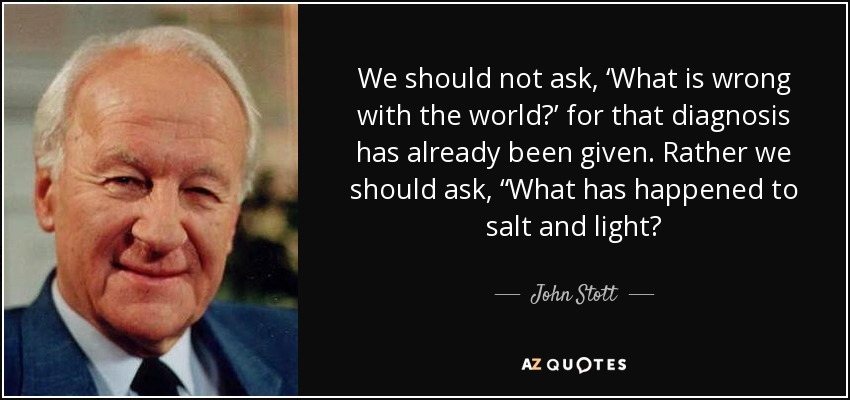
How are we doing as disciples? How are we doing as disciple-makers? What’s the evidence in the world around us? Where’s the salt and light?
Peace be with you.
[1] Matthew tells us this explicitly. See Matthew 27:62-66.
[2] Matthew 2:1-12.
[3] Luke 24:27.
[4] We know this not from the other Gospels. For example, in last week’s Gospel reading, which I discussed in The Mind of Christ, the Mission of the Church.
[5] Some would add a fourth all: for all time.
[6] See Matthew 4:1-11; Luke 4:1-13.
[7] panta ta ethne, in Greek.

To learn more about Rama, click here.