
Some years ago, I read a book titled Corruption: Its Nature, Causes, and Functions, written by Syed Hussein Alatas,[1] a long-serving public servant.[2] It taught me how corruption causes great harm to society, and why and how we must fight it.
Alatas began by listing nine features of corruption. Number three sticks in my mind:
“corruption happens when people deliberately set aside public interest in favour of personal interest.”
I instantly connected that to the Golden Rule taught by Jesus, the Messiah. It’s in the Bible, in the Sermon on the Mount, in the Gospel of Matthew.[3] The Messiah said, “whatever you wish that others would do to you, do also to them, for this is the Law and the Prophets.”
I’m deliberately calling Jesus “Messiah.” Messiah is a Biblical title for Jesus. It stresses that Jesus is king of all things; king of the kingdom of God, which we speak about in the Lord’s Prayer.[4]
The Lord’s Prayer is central to Christian life. It includes the line, “Your kingdom come, your will be done, on earth as it is in heaven.”
In his gospel, Mark deliberately tells us Jesus’ first sermons were about the kingdom. Listen to Mark 1:14-15:
“Now after John was arrested, Jesus came into Galilee, proclaiming the gospel of God, and saying, ‘The time is fulfilled, and the kingdom of God is at hand; repent and believe in the gospel.’”
Mark deliberately tells us what the local ruler, Herod Antipas, did when he heard John was announcing the coming of Jesus, the Messiah. Think of it like John driving around KL, broadcasting that king Jesus is coming. And the Agong responding by ordering the police to arrest John – and Jesus.
The clashing of kingdoms is central to the message of Christianity. In Genesis, the first book of the Bible, the book of beginnings, the kingdom of Satan clashes with the kingdom of God. Satan persuades Adam and Eve to disobey God and to obey instead their own desires.[5]
That disobedience is what we call “the Fall.” It’s what explains everything else which happens: Like Cain killing Abel and bringing down judgment on himself; like those who follow Noah surviving the flood, and those who don’t, drowning; like the builders of Menara Babel being dispersed.
The Bible is about the clash of rulers and their kingdoms. We easily forget this. Because we’re so focused on ourselves: we need food, shelter, clothing, dignity. Then we need lobsters, bungalows, designer clothes, bags, phones, degrees, fancy cars, donations and datukships.
So, we focus on the repentance part of Jesus’ preaching. We tell each other, repeatedly, through what we read, sing, and say to each other, that “repent and believe in the gospel” points to personal salvation, forgiveness of sins, acceptance with God, great joy.
So, we focus religiously on Bible study, prayer, worship. We have no time for people who tell us corruption happens when people set aside public interest in favour of personal interest. We have no time for people who say we must religiously expose, judge, and punish those who are corrupt.
When we’re forced to respond to people like Alatas, we say, “we pray for our rulers, we pray that God will ensure they do his will.” We say our job is just to win people for Christ. And we focus on our families to ensure that they have the best health, wealth, and enjoyment life can offer.
We’re so caught up in the atonement. So grateful that our sins are forgiven because Jesus died for us. Died so that on the Day of Judgment, when God sees us, he’ll see his obedient child, Jesus; not his disobedient child, Adam.[6]
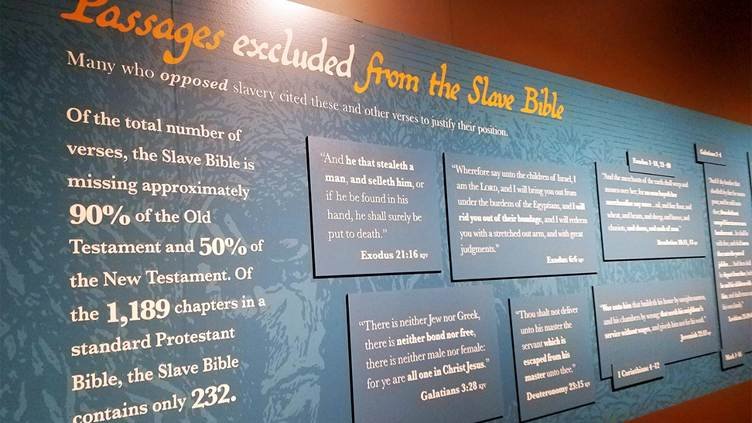
I feel like we’ve done to our Bibles what “The Society for the Conversion of Negro Slaves” did in 1807 when it produced “The Slave Bible: Select Parts of the Holy Bible, for the Use of the Negro Slaves, in the British West-India Islands;” the society,
“deliberately removed portions of the biblical text, such as the exodus story, that could inspire hope for liberation. Instead … [it] emphasized portions that justified and fortified the system of slavery that was so vital to the British Empire.”[7]
The story of the exodus, the freeing of the Israelites from slavery, their journey into the Promised Land, is shaped to tell us that God’s purpose in calling Israel was not only to free them from a ruler who treated them as disposable tools. It was also to instruct them to model fair distribution of resources, justice, punishments; to establish a “godly” kingdom.
I often feel that most Christians are using home-made slave bibles. Bibles without texts which speak about liberty, dignity, laws, policies, and enforcement which reflect the kingdom of God, a kingdom like the one Hussein Alatas longed for, worked for. How about you?
Peace be with you.
[1] I read the Malay translation of it, published by DBP in 2016, under the title Rasuah: Sifat, Sebab dan Fungsi. The English version titled Corruption: Its Nature, Causes, and Functions (1990) was a revision of an earlier book first published in 1968.
[2] Amongst other things, he served as Vice Chancellor of University Malaya in the 1980s.
[3] The Sermon on the Mount is in Matthew 5-7. The specific reference is Matthew 5:12.
[5] In Genesis 2:15-17, God forbids Adam from eating the fruit of the tree of knowledge of good and evil, because if he eats of it, he’ll die. In Genesis 3:1-7, Satan persuades Adam and Eve that if they eat from that tree, their lives will be much better.
[6] We love that teaching, “salvation is by faith through grace, not by works.”
[7] I’m quoting from “The Slave Bible: Let the Story be Told,” on the website of The Museum of the Bible. https://www.museumofthebible.org/exhibits/slave-bible.

To learn more about Rama, click here.