
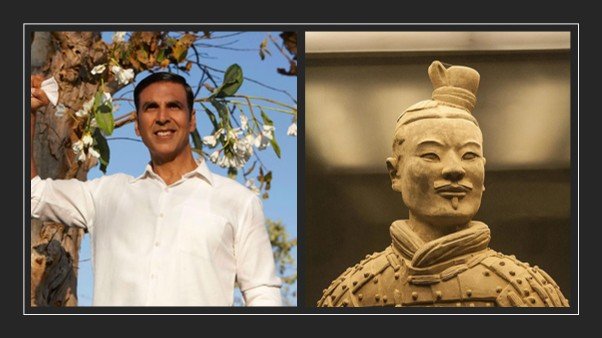
This Sunday, the lectionary invites us to ponder Isaiah 64:1-9. The reading falls within a section[1] to which the English Standard Version supplies the heading “Prayer for Mercy.”
Every text must be read in its context.
Just before today’s text is a remembering of God’s “Day of Vengeance”[2] on the Israelites – including the destruction of their capital, Jerusalem, and its Temple; and their exile to Babylon. And a remembering of God’s earlier mercy toward them when he confronted the Pharoah and freed them from slavery through the exodus from Egypt – even parting the Red Sea for them and drowning Egypt’s pursuing army.[3]
Just after today’s text is a speech by God, remembering the actions of his people, expressing his exasperation with them; his grief; his longing that they would return to him.
As I write this reflection, three things are fresh in my mind.
The first is a Christian wake service which I attended recently. The dead man’s family and friends recounted the suffering he had endured, his zest for life, and the joy he brought to others. The preacher spoke about Christians’ confidence in the resurrection. He reminded us that Christians never say “goodbye,” we only say, “till we meet again.”
The second is the shooting-to-death of a young man in March last year, in Kuala Terengganu, by a group of policemen. His family and friends are still grieving. They’re convinced the police lied about the reason they killed him. I myself heard the entirely unbelievable story the police told in court this week, while under oath, about how and why they killed him.
The third thing is the terracotta soldiers in Xian, China. A short video shared by a friend reminded me that these life-size clay soldiers were produced on command of the Emperor Qin Shi Huang[4] of China about 2,200 years ago. On his orders, these “soldiers” were buried during the course of his life so that they would be ready to protect him when he would die and be buried!
With those thoughts fresh in my mind, I pondered today’s text. I’m amazed by Isaiah’s confidence that he’s called to be the explainer of things to his people: the Israelites; whom God chose to favour more than other humans whom he also created and spread across the earth.
I don’t have the space and time here to go into the details. I can only say that Isaiah’s understanding – which is also the understanding of other prophets whose works are included in the Bible – is accepted and adopted by Jesus and his apostles, and the authors of the New Testament.
What is Isaiah’s understanding? I’ll limit myself to four figures of speech found in today’s reading.
In verse 1, we read, “O that you would rend the heavens and come down.” Isaiah spoke these words 2,600 years ago. Rending means tearing. In those days, you tore your clothes to show you shared the grief of others. Isaiah was saying, “God, shame on you! You say you’re our God. So, why aren’t you joining us in our grief? Don’t you know that because you’ve turned your back to us, many among us have turned their backs to you?” Isaiah recorded what many were saying at the time.
In the first part of verse 6 we read, “all our righteous deeds are like a polluted garment.” Isaiah, like all Biblical writers, explains everything bad through the lens of sin, of disobedience, of putting self before God. No matter how much good we do, we remain impure; “polluted garment” is the polite way of saying “blood-stained menstrual pad.” Destined for only one thing: disposal![5]
In the second part of verse 6, we read, “We all fade like a leaf, and our iniquities, like the wind, take us away.” We often speak as if we’ll live forever. We seldom speak about the compelling evidence that death is certain, and that “early” death is common. Did you know that 9 percent of those who died in Malaysia in 2025 were aged 40 years or less?[6] Isaiah says sin dries us up like leaves, and we will surely die.
In verse 8, we read, “we are the clay, and you are our potter.” Isaiah lived about 400 years before Emperor Qin. If Isaiah had been in the Emperor’s court, he would’ve warned him that he too is clay. And that God expects him to conform to His image, to project both justice and mercy. And if Isaiah were in Malaysia today, he would say the same thing to the policemen who killed and lied about it – and to the family and friends of the dead man.
Someone famously said that only two things in life are certain: death and taxes. I think judgment is also certain: if not in this life, in the next. And it’s for this reason that we should respond to injustices. But our responses should be driven by mercy towards all, including those who are unjust: because those who don’t admit their wrongdoings, and change their ways, will receive not the mercy of God, but his punishment.
What do you think?
Peace be with you.
[1] 63:15-64:12.
[2] 63:1-6.
[3] 63:7-14.
[4] In my Malaysian school history textbook, he was called “Shi Huang Ti.”
[5] The man in the image is the actor who played “pad man” in the move of the same name. It tells why and how a villager invented and marketed affordable sanitary pads.
[6] I’m relying on data from the Department of Statistics, Malaysia.

To learn more about Rama, click here.